
The Truth About Sauna Detoxification That Changed How I Think About Health
I used to think the whole sauna detoxification thing was mostly hype. Another wellness trend that sounded good on Instagram but didn’t really hold up when examined through actual scientific research.
We’ve got livers and kidneys, right? Those are the organs that handle detoxification.

What could sitting in a hot box really do?
Then I started digging into the research. Not the blog posts or the marketing claims from sauna companies, but the actual peer-reviewed studies published in medical journals.
My perspective shifted pretty dramatically.
The answer to whether saunas genuinely help detoxify your body is way more nuanced and actually more interesting than I expected. What really got my attention was discovering that the type of sauna matters significantly, the duration of your sessions makes a huge difference, and consistency over months is where you see measurable results. Plus, there’s this fascinating mechanism involving fat-soluble toxins that accumulate in your tissues over years of environmental exposure.
Understanding sauna detoxification has been a game-changer for many who seek to enhance their health and well-being.
Those compounds don’t just leave your body easily through normal elimination channels, but heat can mobilize them in ways that regular sweating from exercise simply doesn’t match.
So I decided to experiment with this myself while continuing to follow the emerging research. What I learned has genuinely changed my approach to health optimization, and I think it might shift how you think about it, too.
Understanding Why Traditional Detox Pathways Miss Certain Toxins
Something really surprised me when I started learning about this. Your liver and kidneys are incredibly efficient at processing water-soluble compounds.
They’re designed to filter your blood, break down substances, and eliminate them through urine.
That system works beautifully for most metabolic waste products.
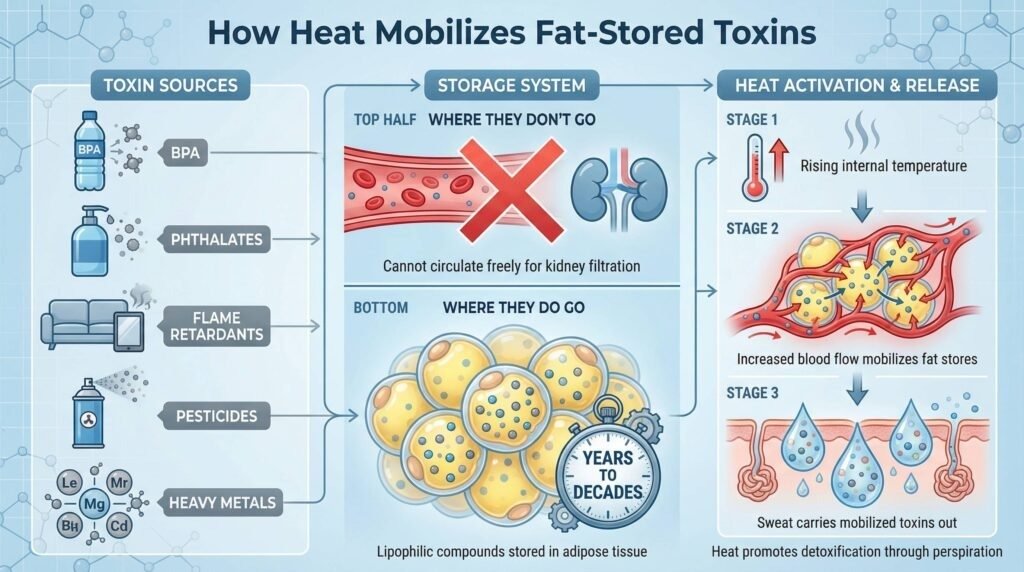
But modern environmental exposure presents a different challenge. We’re constantly exposed to lipophilic compounds, substances that dissolve in fat rather than water.
These include things like BPA from plastics, phthalates from personal care products, flame retardants from furniture and electronics, pesticide residues, and certain heavy metals.
These compounds don’t circulate freely in your bloodstream, where your kidneys can easily grab them. Instead, they get stored in your fat tissues, where they can sit for years or even decades.
Your body does eventually process these stored toxins, but the rate is really slow.
When you raise your core body temperature significantly, you mobilize fat stores. Blood flow to adipose tissue increases dramatically, and those stored lipophilic compounds begin circulating.
Simultaneously, your sweat glands are producing significant volumes of fluid that contain a surprising array of these mobilized substances.
What I found particularly compelling was research showing that sweat composition is actually different from blood and urine composition. Certain toxins appear in higher concentrations in sweat than they do in other bodily fluids, suggesting that sweating represents a truly distinct elimination pathway.
You’re genuinely moving compounds out of your system that wouldn’t otherwise leave as easily.
The research on this is pretty specific, too. Studies measuring concentrations of things like PCBs, certain pesticides, and heavy metals in sweat versus urine showed that some of these compounds appeared in sweat at levels that exceeded what was found in urine samples from the same people.
That suggests your body is preferentially eliminating certain stored toxins through sweat when given the opportunity.
Why I Switched to Far Infrared and Haven’t Looked Back
I started my sauna experimentation with a traditional steam sauna at my gym. It felt great, I was definitely sweating, and I enjoyed the relaxation benefits.
But when I came across comparative research showing that far infrared saunas produced measurably higher concentrations of eliminated toxins compared to traditional steam saunas, I decided to invest in a home unit.
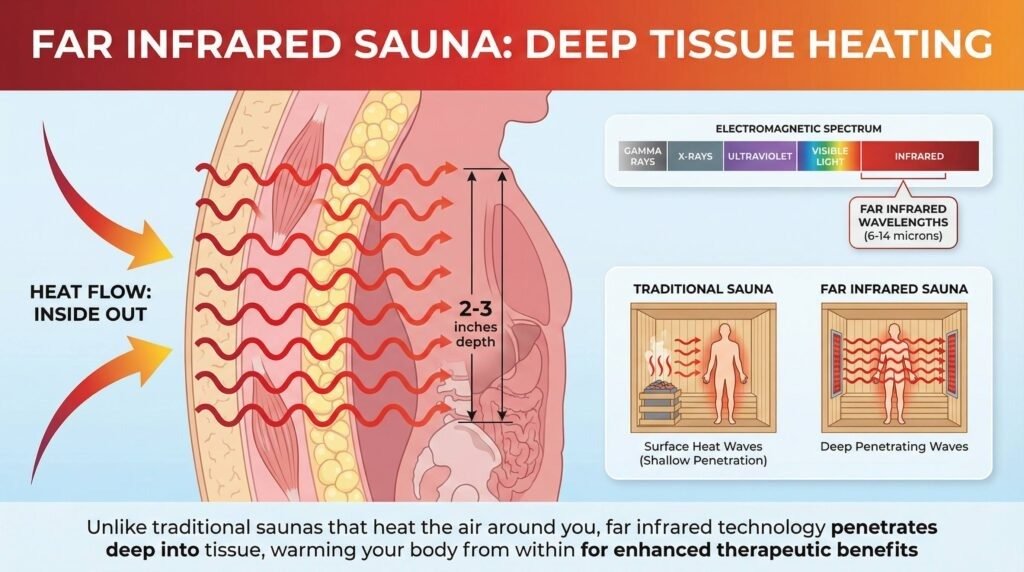
The difference is really in how the heat penetrates your tissues. Traditional saunas heat the air around you, which then heats your skin surface.
You sweat primarily as a cooling mechanism.
Far infrared saunas use wavelengths that penetrate several inches into your tissue, heating you from the inside out. This deeper tissue heating reaches fat cells more effectively, which is exactly where those lipophilic toxins are stored.
The experience is genuinely different, too. In a traditional sauna, I could tolerate maybe 15-20 minutes before the air temperature became uncomfortable.
With far infrared, I can comfortably sit for 40-45 minutes because the air temperature is lower, around 120-140°F versus 180-200°F in traditional saunas, but my core temperature still rises significantly.
That longer duration matters tremendously for mobilizing stored compounds. Think about it this way.
If you can only tolerate 15 minutes of heat exposure, you’re getting a brief spike in fat mobilization and toxin circulation.
But if you can comfortably sustain 40-45 minutes, you’re maintaining that mobilization state for much longer, giving your body more opportunity to actually eliminate what’s been released.
I tracked my sessions meticulously for the first three months. Duration, temperature, how I felt during and after, energy levels throughout the day, sleep quality, and any changes in chronic symptoms I’d been dealing with.
Around week ten, I noticed something shift.
My morning brain fog, which had been a constant companion for years, started clearing. My recovery from workouts improved noticeably.
Even my skin texture changed, becoming clearer and more even-toned.
Could this have been a placebo effect? Maybe partially.
But the research on patients with documented toxic exposure showing measurable improvements after consistent sauna protocols suggested I was experiencing something physiologically real.
The Protocol That Actually Produces Results
You need a structured, progressive approach if you’re serious about using saunas for detoxification support. I started with just two sessions per week at 20 minutes each for the first two weeks.
This adaptation period is genuinely important. Your cardiovascular system needs to adjust to the stress of elevated core temperature.
Your sweat glands become more efficient with repeated exposure.
You’ll actually notice you start sweating more quickly and more profusely as your body adapts.
After that initial adaptation, I moved to three sessions weekly at 30 minutes each for another month. This is where I started feeling those subjective improvements I mentioned earlier.
By month three, I was doing four sessions weekly at 40-45 minutes each, which is where I’ve stayed.
The timing of sessions matters too. I initially did morning sessions, thinking I’d start my day feeling great.
But I found evening sessions worked better for me.
The elevated core temperature, followed by the cool-down period, triggered remarkable sleep improvements.
There’s actually research supporting this. The temperature drop after sauna use mimics the natural circadian temperature decline that promotes deeper sleep.
Your body temperature naturally drops in the evening as part of preparing for sleep, and the sauna-induced temperature elevation followed by cooling amplifies this signal.
Hydration became absolutely critical as I increased duration and frequency. I start hydrating two hours before a session, drink 8-12 ounces during the session, and then replenish with electrolyte-enhanced water afterward.
Without this hydration protocol, I would feel depleted and headachy.
With proper hydration, I feel energized and clear-headed.
I also learned that pre-hydration matters more than I initially thought. If you show up to a sauna session already mildly dehydrated, which most people are without realizing it, you’re starting from a deficit.
Your blood volume is lower, your circulation is compromised, and your body can’t produce the volume of sweat needed for effective toxin elimination.
Supporting Detoxification Beyond Just Heat Exposure
Sauna use works best as part of a comprehensive approach. You’re mobilizing stored toxins, which is valuable, but you also need to support the organs actually processing and eliminating those compounds.
I added specific nutritional support that made a noticeable difference. Cruciferous vegetables like broccoli sprouts, which contain sulforaphane, support liver phase II detoxification pathways.
These pathways are responsible for taking the toxins your liver has initially processed and making them water-soluble so they can be eliminated through urine or bile.
Glycine-rich foods and collagen supplementation provide the amino acids your liver needs to conjugate toxins for elimination. Adequate fiber intake is really important, too.
I’m talking 40-50 grams daily, which binds eliminated toxins in your digestive tract so they’re actually excreted as opposed to reabsorbed.
This reabsorption issue is something I hadn’t considered before researching this. Toxins that get eliminated into your bile and then into your intestines can be reabsorbed through your intestinal wall if there isn’t adequate fiber to bind them.
You end up recirculating the same compounds you just worked to eliminate.
Antioxidant support also became really important. The process of mobilizing stored toxins can temporarily increase oxidative stress as those compounds circulate before elimination.
I focused on deeply colored vegetables, berries, green tea, and targeted supplementation with compounds like NAC and glutathione precursors.
I also became much more conscious about limiting ongoing toxic exposure. It doesn’t make sense to work on eliminating stored toxins while simultaneously adding new ones.
I switched to glass food storage containers, replaced plastic water bottles with stainless steel, changed to cleaner personal care products, and started choosing organic produce for the foods highest in pesticide residues.
The synergy between these approaches is where real results happen. Sauna alone mobilizes toxins.
Nutritional support alone helps your liver process compounds.
Reducing exposure alone decreases your incoming toxic load. But combining all three creates a genuinely effective strategy.
Tracking Progress When Results Aren’t Immediately Obvious
One of the challenges with detoxification work is that changes happen gradually and can be subtle. You’re not going to feel dramatically different after one week or even one month.
The improvements accumulate slowly over time, which makes tracking important.
I created a simple daily log that took maybe two minutes to fill out. Energy level from 1-10, sleep quality from 1-10, any physical symptoms, mood, and mental clarity, workout recovery, and any notable changes.
Daily Health Log
Track your daily wellness in under 2 minutes
Recent Entries
Over weeks and months, patterns emerged that would have been invisible without tracking.
My energy ratings averaged around 5-6 during the first month, climbed to 6-7 during month two, and by month four consistently sat at 7-8. That gradual improvement would have been easy to miss without data.
Same with sleep quality.
The improvement was steady but not dramatic on any single night.
Some people invest in laboratory testing to measure specific toxin levels before and after sauna protocols. Specialized labs can analyze sweat composition, blood levels of specific compounds, or urine metabolite testing.
I didn’t go that route initially because it’s expensive, but after six months of consistent practice, I did do pre- and post-testing for heavy metals.
My mercury levels dropped by about 40%, and lead levels decreased by roughly 30%. Those goal measurements validated what I was experiencing subjectively.
The most interesting feedback came from changes I hadn’t specifically tracked. Friends and family started commenting that I looked different. Healthier skin, clearer eyes, more energy in how I moved and spoke.
My massage therapist noticed that my tissue quality had changed, with less chronic tension and better fascial mobility.
These external observations confirmed that real physiological changes were happening.
What to Expect During the Detoxification Process
I wish someone had warned me about what the first few weeks might feel like. When you start mobilizing stored toxins, especially if you have a significant accumulated burden, you can experience what’s often called detox symptoms or a healing crisis.
During weeks two through four, I felt worse before I felt better. I had mild headaches, fatigue that felt different from normal tiredness, some digestive changes, and even a few breakouts on my skin. This freaked me out initially.

But research on detoxification protocols mentions this pattern often. As stored toxins mobilize and circulate before elimination, you can temporarily feel their effects more acutely.
The key is supporting elimination pathways so those mobilized compounds actually leave your body as opposed to just recirculating.
When I dialed in proper hydration, fiber intake, and nutritional support, the uncomfortable symptoms decreased noticeably. I also learned to distinguish between genuine detox effects and simply overdoing the sauna practice.
If you push too hard with excessively long sessions or too frequent use before your body adapts, you just create unnecessary stress. The sweet spot is challenging your system enough to trigger adaptation and toxin mobilization without overwhelming your capacity to process and eliminate.
By week five or six, the uncomfortable symptoms had passed, and I started experiencing the positive effects. Better energy, clearer thinking, improved sleep, better workout recovery.
That progression seems fairly typical based on research protocols and anecdotal reports from others doing similar work.
Long-Term Benefits Beyond Detoxification
What surprised me most after a year of consistent practice is how many additional benefits emerged beyond the detoxification focus. The cardiovascular adaptations have been remarkable.
My resting heart rate dropped by about eight beats per minute, my heart rate variability improved significantly, and my blood pressure readings normalized from the high-normal range to solidly optimal.
The pain relief effects have been genuinely life-changing. I’ve dealt with chronic low back tension and occasional shoulder pain from years of desk work.
After several months of regular sauna use, these chronic complaints decreased dramatically.
The mechanism seems to be a combination of improved circulation to tissues, anti-inflammatory effects, and the activation of heat shock proteins that repair cellular damage. Heat shock proteins are molecules your cells produce in response to stress, and they help repair damaged proteins and protect cells from further damage.
My athletic performance and recovery improved noticeably, too. I run regularly and do resistance training, and the quality of my workouts has increased while soreness and recovery time have decreased. Research on athletes using post-workout sauna protocols shows enhanced endurance adaptations, increased plasma volume, and improved thermoregulation, all of which I experienced personally.
The mental health benefits have been equally valuable. Regular sauna use has become a meditative practice for me, a dedicated time to disconnect from devices and be with my thoughts.
But beyond the mindfulness aspect, there seem to be genuine neurochemical effects.
Endorphin release, cortisol reduction, and possibly even neurogenesis stimulation. My baseline mood and stress resilience have improved substantially.
Even my immune function seems more robust. I used to catch every cold that circulated through my office, but over the past year, I’ve been sick maybe once compared to my usual three to four times annually.
Research does show that regular sauna use can enhance immune markers and reduce illness frequency, which matches my experience.

Frequently Asked Questions
Does an infrared sauna really remove toxins?
Yes, infrared saunas have been shown to eliminate certain toxins through sweat, particularly fat-soluble compounds like BPA, phthalates, and heavy metals. Research has demonstrated that these substances appear in sweat at concentrations that sometimes exceed their levels in blood or urine, indicating that sweating provides a distinct elimination pathway.
How often should you use a sauna for detox?
Start with two sessions weekly at 20 minutes each for the first two weeks to allow your body to adapt. After this initial period, gradually increase to three sessions weekly at 30 minutes each. After two to three months, you can work up to four sessions weekly at 40-45 minutes each for optimal detoxification benefits.
What toxins does sauna remove?
Saunas help eliminate lipophilic toxins that are stored in fat tissue, including BPA from plastics, phthalates from personal care products, flame retardants from furniture and electronics, certain pesticide residues, heavy metals like mercury and lead, PCBs, and other persistent organic pollutants that accumulate in tissues over time.
Is far infrared better than a traditional sauna?
Far infrared saunas appear more effective for detoxification because they penetrate tissues more deeply than traditional saunas, reaching fat cells where lipophilic toxins are stored. The lower air temperature also allows for longer, more comfortable sessions, which means more time for toxin mobilization and elimination.
Can sauna detox make you feel sick?
Yes, during weeks two through four of starting a sauna protocol, you may experience temporary symptoms like mild headaches, unusual fatigue, digestive changes, or skin breakouts. This happens as stored toxins mobilize and circulate before elimination.
Proper hydration, fiber intake, and nutritional support help minimize these effects.
How much water should I drink before a sauna?
Start hydrating two hours before your session, drink 8-12 ounces during the session itself, and replenish with electrolyte-enhanced water afterward. Pre-hydration is particularly important because arriving at a session already dehydrated compromises blood volume, circulation, and your body’s ability to produce adequate sweat.
Do you need supplements for sauna detox?
While not absolutely required, supplements that support liver detoxification pathways make the process more effective. NAC and glutathione precursors help with antioxidant support, collagen provides amino acids for toxin conjugation, and trace minerals help replace what’s lost through heavy sweating.
How long does it take to see detox results from sauna?
Most people notice subjective improvements like better energy and sleep quality around weeks 10-12 of consistent practice. Measurable changes in toxin levels, confirmed through laboratory testing, typically appear after six months of regular sessions at three to four times weekly.
Key Takeaways
Sauna detoxification is genuinely effective when approached as a long-term practice as opposed to a quick fix, with far infrared saunas showing superior results for mobilizing deeply stored lipophilic toxins from fat tissue.
Your protocol should build progressively from 20-minute sessions twice weekly to 40-45 minute sessions three to four times weekly over a period of months, with proper hydration being absolutely critical to success.
Detoxification works best as a comprehensive approach combining sauna use with nutritional support for liver and kidney function, adequate fiber intake to bind eliminated toxins, antioxidant support to manage oxidative stress, and reduced ongoing toxic exposure.
Track your progress through both subjective markers like energy and sleep quality and goal measures when possible, recognizing that improvements accumulate gradually over months as opposed to appearing dramatically in weeks.
Expect an initial period where you might feel worse before feeling better as stored toxins mobilize, and support this process through proper hydration, nutritional strategies, and avoiding excessive session length or frequency before your body adapts.
The additional health benefits beyond detoxification, including cardiovascular improvements, pain reduction, enhanced athletic performance, better sleep, improved mental health, and stronger immune function, make consistent sauna practice valuable even for those not specifically focused on toxin elimination.
Disclosure: This site contains affiliate links. As an Amazon Associate, we earn from qualifying purchases.